
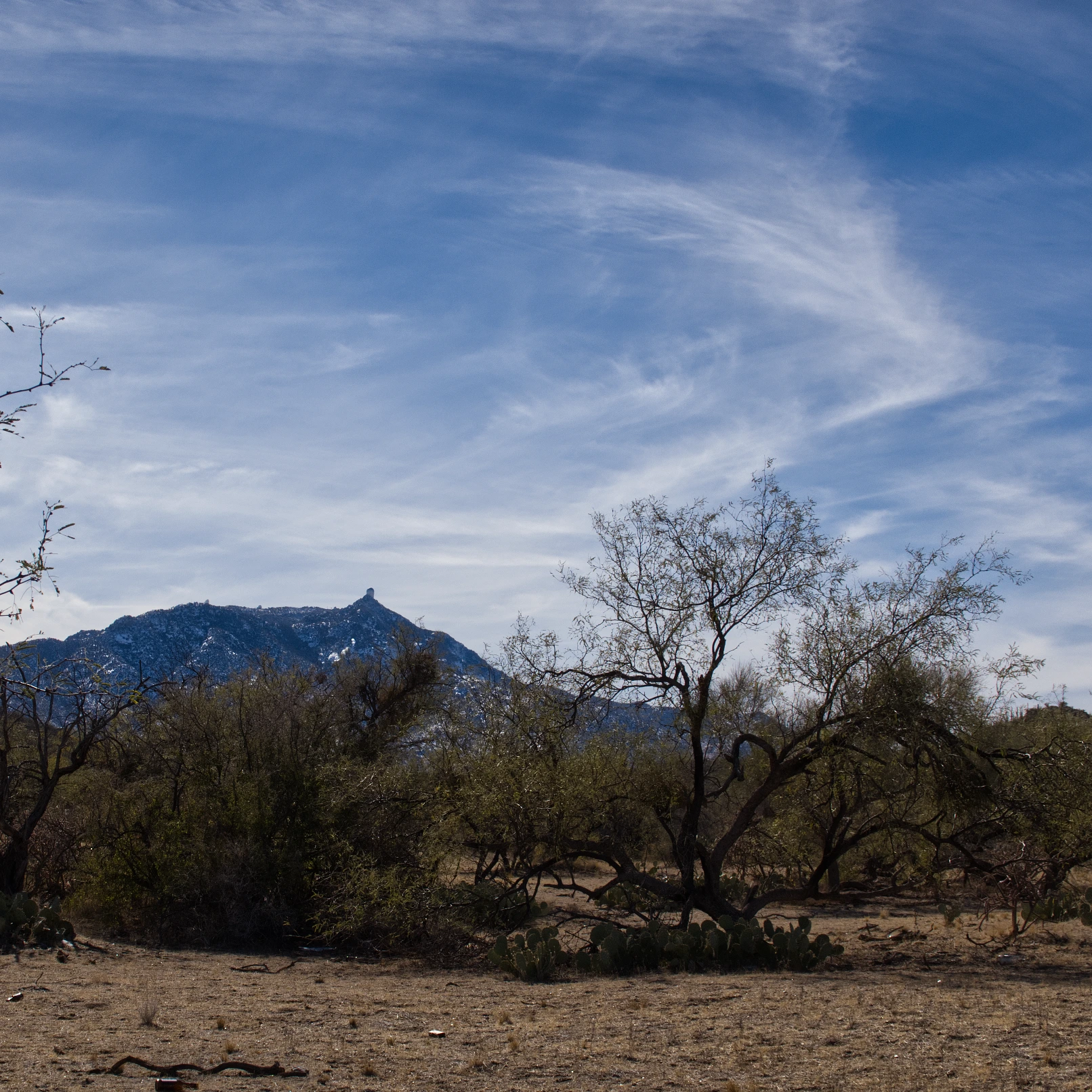
The Madrean Sky Island Region—a striking archipelago of isolated mountain ranges rising out of desert and grassland "seas" across southeastern Arizona, southwestern New Mexico, and northwestern Mexico—boasts a rich agricultural tapestry. Because these mountains create dramatic vertical climate zones, the region has served as a unique incubator for food production, foraging, and ranching for millennia.
The Indigenous Era (Pre-Contact to Late 1600s)
Before European contact, the local O'odham (Tohono and Akimel), Sobaipuri, Opata, and Yoeme (Yaqui) peoples mastered hyper-localized, arid-land agriculture. Their food system relied on a strategic mix of drought-hardy domesticated crops and wild seasonal harvesting from the various elevations of the Sky Islands.
The Cultivated Staples: * The Three Sisters: Farmers grew maize (such as the ancient Chapalote flint corn), squash, and Tepary beans (Phaseolus acutifolius). Tepary beans are legendary for their ability to thrive on a single flood event where other crops would wither.
Other Domesticates: Grain amaranth and panic grass were also grown for seeds.
The Wild Harvest (The "Sky Island" Bounty):
Agave (Maguey): The hearts (cabezas) of native agaves were harvested from rocky slopes and slow-roasted in massive underground pits for days, yielding a sweet, fibrous, high-calorie food staple.
Mesquite Pods: Harvested from valley bottoms, these were dried and ground into a naturally sweet, nutritious flour.
Cacti Fruits: Saguaro, organ pipe, and prickly pear (tunas fruit and nopales pads) provided vital hydration and vitamins during the blistering summer heat.
Montane Forage: Emory oak acorns (bellotas) were gathered in the high woodlands, and wild chiltepín peppers (the fiery, berry-sized ancestor of most modern chiles) were hand-picked from canyon floors.
Techniques: Indigenous populations utilized ak-chin (floodwater) farming, redirecting the intense summer monsoon runoff from the mountain canyons into floodplain fields. On hillsides, they built stone check-dams (trincheras) to hold back soil and conserve moisture.
The Colonial Era (Late 1600s to Mid-1800s)
The arrival of Spanish missionaries, most notably the Jesuit Padre Eusebio Francisco Kino in 1687, fundamentally shifted the ecology and diet of the region (then known as the Pimería Alta). This era introduced European crops, orchards, and livestock that could utilize the region's resources year-round.
The Winter Wheat Revolution: The introduction of White Sonora Wheat was a massive game-changer. Indigenous agriculture was strictly summer-centric. Wheat, however, grew during the cool winter months and utilized winter rains, effectively doubling the region's food security.
The Birth of Regional Ranching: Father Kino is widely credited with establishing the livestock industry in the Southwest. He introduced:
Criollo Cattle: Hardy, nimble Spanish cattle that easily adapted to desert scrub and steep, rocky mountain slopes.
Churro Sheep: Highly valued for their resilience, meat, and coarse wool used for weaving.
Goats, Horses, and Mules: Essential for meat, dairy, and traversing rugged mountain trails.
Mission Orchards and Vineyards: Walled mission gardens introduced figs, pomegranates, quinces, peaches, apricots, and wine grapes (initially cultivated for sacramental wine). Watermelons and melons caught on so rapidly among indigenous communities that they often spread via native trade networks ahead of the actual missionaries.
Agave Transformation: While the indigenous population had always eaten agave, the Spanish introduced copper stills, laying the groundwork for the distillation of agave into regional spirits like Bacanora (in Sonora) and mezcal.
The Modern Era (Late 1800s to Present)
The modern era saw the drawing of the US-Mexico border, the arrival of railroads, and the deployment of heavy industrial irrigation. Today, the region balances massive commercial outfits with a vibrant heritage-food movement.
Commercial Ranching: The lean, scrub-eating Criollo cattle were largely replaced by British and European beef breeds like Hereford, Angus, and Brangus crosses, which dominate the vast, sweeping desert grasslands surrounding the mountains.
Industrial Cash Crops: The introduction of deep groundwater pumping in the 20th century turned valleys like the Santa Cruz and Sulphur Springs into massive producers of long-staple cotton, alfalfa (for livestock feed), and citrus. Notably, southeastern Arizona became one of the top pecan-producing regions in the world.
The Heritage Renaissance: Led by a strong local-food movement—spurred in part by Tucson's designation as a UNESCO City of Gastronomy—there is a major push to grow climate-appropriate crops. Farmers are once again commercially producing White Sonora Wheat, Tepary beans, and heirloom fruits from the original Mission palette because they require significantly less water than modern commercial crops.
Viticulture (Wine Grapes): The high-altitude valleys nestled between the Sky Islands (such as Sonoita and Willcox in Arizona) feature rich volcanic soils, blistering days, and chilly nights. This specific terroir has turned the region into a booming southwest wine hub, specializing in Mediterranean and Southern European varieties like Syrah, Grenache, Mourvèdre, and Malvasia Bianca.
Niche Wildcrafting: Small-scale artisan businesses still harvest the wild landscape, producing gourmet products like mesquite flour, prickly pear syrups, and mesquite-smoked chiltepines for a global market.